
Yes. You can face a DUI charge after tailgating at a West Virginia football game if you drive while impaired or violate the state’s applicable alcohol concentration laws. For drivers age 21 or older, a blood alcohol concentration (BAC) of 0.08% or higher is a key legal threshold. A driver can also be charged based on evidence of impairment, even with a BAC below 0.08%. West Virginia DUI laws can apply to public roads and parking areas open to public vehicle travel. If you are arrested after a game in Morgantown, Huntington, or elsewhere in West Virginia, the details of the stop, driving, and testing may affect your defense.











Why Can Football Tailgating Lead to DUI Charges?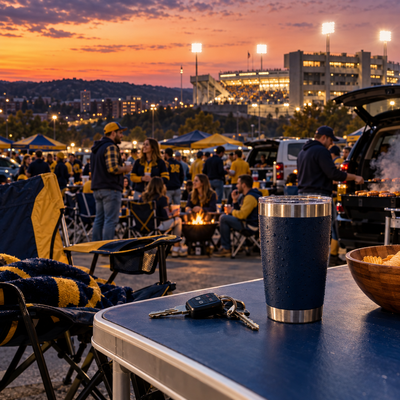
Tailgating is part of the experience at West Virginia University football games in Morgantown and Marshall University games in Huntington. Fans may arrive hours before kickoff, drink during pregame gatherings, and leave in heavy postgame traffic.
Alcohol can affect judgment, reaction time, and coordination before a driver recognizes significant impairment. Busy parking lots, pedestrian crossings, and traffic backups add to the demands of driving. Police may investigate a driver who commits a traffic violation or shows signs of impairment while leaving a stadium area.
The key legal issue is not whether you attended a tailgate. It is whether the state can prove the prohibited driving conduct and impairment or alcohol concentration required by law.
What Are the West Virginia DUI and BAC Limits?
Under West Virginia Code §17C-5-2, the applicable circumstances may include:
- Drivers age 21 or older: A BAC of 0.08% or higher can support a DUI charge under the statute. Evidence of impairment can also support a charge below that level.
- Drivers younger than 21: A separate underage provision applies to a BAC of 0.02% or higher but less than 0.08%. Underage drivers may also face other DUI provisions when their circumstances meet those elements.
- Drug impairment: Driving while impaired by controlled substances, other drugs, or a combination of substances may lead to DUI charges.
- BAC of 0.15% or higher: A separate penalty provision applies when the state proves this higher alcohol concentration.
BAC and impairment are related but distinct issues. A breath result is not the only evidence police may collect, and the number of drinks alone does not establish a driver’s BAC.
Read more about West Virginia blood alcohol concentration limits.

Harley Wagner
Defending West Virginia Residents for over 24 Years
Can You Get a DUI in a Stadium Parking Lot?
Yes. Driving while impaired in a stadium parking lot can lead to a DUI charge when the location and conduct satisfy West Virginia law.
West Virginia Code §17C-5-2a explains that the phrase “in this state” can include roads and areas that are not publicly maintained but are open to the public for vehicle travel. It also sets out an exception affecting specified offenses when someone drives solely and exclusively on their own property in an area not open to public vehicle travel.
For example, an officer might observe a driver moving erratically through a public-use parking area near Milan Puskar Stadium. The officer may investigate suspected DUI before the driver reaches a public highway.
A parking lot is not automatically outside the reach of West Virginia DUI law. Whether a charge is supported depends on the location, the driving evidence, and the applicable statute.
Standing beside a parked vehicle while drinking, owning a vehicle, or possessing keys does not alone prove that a person drove while impaired. Evidence about vehicle movement and the identity of the driver may be significant.

Harley and Heather gave me peace of mind as they walked me through the process of my DUI. Heather was so quick to answer even the smallest and probably irrelevant questions I had. I was extremely nervous to walk in the courtroom, but Harley made sure I was in and out of there in no time with the best deal I could think of. My DUI charge was reduced to a speeding ticket and some online DUI classes. Would absolutely recommend Harley and Heather if you’re ever in need of a lawyer.”
- Antea Jarazi
The Wagner Law Firm was amazing from beginning to end dealing with my case. This was my first time ever dealing with anything like this and they helped me tremendously and answered all my questions super fast. We got the best outcome possible for my case and I will be recommending Harley and Heather to anyone that’s ever in my situation."
- Savanna Cummings
Harley and Heather do not stop and are excellent at always keeping their clients up to date on the status of their case and never left wondering. They do all the work and are very well connected throughout the state. I will forever be grateful to both Harley and Heather for what they did for me,,,, they aren’t just another law firm, they are great people who truly care. Thank you."
- Clint Anderson
Can You Be Arrested After Drinking Only Two or Three Beers?
Yes, depending on the circumstances. The number of beers does not determine whether a person is impaired or has reached a prohibited BAC.
Factors that can affect alcohol concentration include:
- Serving size and alcohol content
- Body size and individual metabolism
- How quickly and when alcohol was consumed
- Food consumption
- Medications or other substances
- Time elapsed before driving
Do not assume that a full football game provides enough time to become sober. Alcohol absorption may continue after the final drink, and coffee or fresh air does not reliably speed alcohol elimination.
If you plan to drink, choose a sober driver or another transportation option before the game.
What Happens If Police Stop You After a Football Game?
An officer may stop a vehicle after observing a traffic violation or facts supporting reasonable suspicion of unlawful activity. A postgame investigation may involve:
- Observations: The officer may document driving behavior, speech, coordination, the odor of alcohol, or other circumstances.
- Roadside investigation: The officer may request field sobriety exercises or a preliminary breath test when the applicable legal requirements are met.
- Arrest decision: The officer must have a lawful basis for arrest.
- Secondary chemical testing: Following a lawful arrest, an officer may request a breath or blood test under West Virginia’s implied consent provisions.
- Court and license proceedings: A charge may lead to criminal hearings and separate consequences for driving privileges.
Under West Virginia Code §17C-5-4, refusal of a properly requested secondary chemical test may trigger license revocation procedures. The statute expressly provides that refusing a blood test only may not, by itself, result in license revocation. A secondary blood test generally requires either written consent or a judicial warrant. The legal consequences depend on which test was requested and the facts surrounding that request.
Learn more about what happens after a DUI arrest.
Related Videos
What are the penalties for a DUI conviction?
What happens if I'm arrested for a first DUI?
Can Police Stop Every Driver Leaving a Tailgate?
No. Attending a tailgate does not, by itself, justify an individualized traffic stop. Officers generally need a legally sufficient basis, such as an observed traffic violation or reasonable suspicion based on specific facts. Properly conducted sobriety checkpoints are assessed under different legal requirements.
If you are charged, your attorney can examine why the officer stopped your vehicle, what occurred during the investigation, and whether the arrest was legally justified.
See reasonable suspicion and probable cause in West Virginia DUI cases.
What Are the Penalties for a DUI After a Football Game?
Penalties depend on the offense, BAC evidence, prior convictions, injuries, and other circumstances.
For an offense under §17C-5-2(e), the statute provides a fine of $100 to $500 and possible confinement of up to six months. Driving privileges may also be revoked, subject to applicable ignition interlock provisions.
For an offense involving a BAC of 0.15% or higher under §17C-5-2(f), the statute provides:
- A fine of $200 to $1,000
- Jail confinement of two days to six months, including at least 24 hours of actual confinement
- License revocation, subject to applicable test-and-lock program provisions
Other DUI offenses can involve more serious penalties, including when someone is injured or prior convictions apply. Court costs, transportation restrictions, and possible insurance consequences may add to the impact of a case.
Case Results
Can a First-Time DUI Charge Qualify for Deferral?
Some defendants charged with a qualifying first offense may be eligible for deferral under West Virginia Code §17C-5-2b. The process involves conditional probation and participation in the Motor Vehicle Alcohol Test and Lock Program.
The statute requires an eligible person to notify the court of the intention to seek deferral within 30 days of arrest. Other eligibility conditions apply, including restrictions involving previous DUI convictions. Successful completion can support dismissal of the charge through the statutory procedure.
Because the deadlines and requirements are specific, seek legal advice promptly after an arrest.
How Can a DUI Attorney Challenge Charges Following a Tailgate?
A DUI arrest is an allegation, not a conviction. A West Virginia DUI defense attorney can review whether the prosecution has sufficient admissible evidence to establish the charged offense.
Issues that may deserve examination include:
- The traffic stop: Did police have the legal justification required to stop the vehicle?
- Evidence of driving: Can the state establish who drove and when?
- Field sobriety testing: Were the tests administered and interpreted appropriately under the circumstances?
- Breath or blood testing: Were equipment requirements, collection procedures, and applicable safeguards followed?
- Timing: Does the evidence establish impairment or the relevant BAC at the legally significant time?
- Witnesses and recordings: Do police recordings, stadium-area cameras, messages, or witness accounts support or contradict the allegations?
For example, if testing occurred well after a fan allegedly drove away from a tailgate, the timing of consumption, driving, and testing may require close examination. The facts determine which arguments are available.
What Should You Do After a DUI Arrest Following Tailgating?
Take practical steps to preserve information and understand your obligations:
- Review all documents. Check the charge, court appearance dates, license notices, and instructions you received.
- Record the timeline. Note when you arrived, when you consumed alcohol, when you drove, and when officers approached you.
- Preserve relevant evidence. Keep receipts, parking records, rideshare receipts, photographs, messages, and witness contact details.
- Avoid discussing the allegations online. Social media posts may complicate your case.
- Follow driving restrictions and court instructions. A pending case may involve deadlines or limitations.
- Speak with a DUI defense attorney promptly. Early advice can help you identify deadlines and assess the evidence.
Frequently Asked Questions About Tailgating DUI Charges
Can I get a DUI for driving only a short distance from a tailgate?
Yes. West Virginia law does not provide a general exemption merely because you drove a short distance. The prosecution must still establish the elements of the charged offense.
Can I get a DUI if I drank before kickoff but drove after the game?
Yes. Several hours passing does not automatically establish sobriety. The evidence must address the applicable alcohol concentration or impairment requirements at the relevant time.
Can a college student face DUI charges after a football game?
Yes. College students are subject to West Virginia DUI laws. Drivers younger than 21 also face the separate lower-BAC provision.
Can I challenge a breath test result?
Potentially. An attorney may examine the device, operator qualifications, testing records, procedures, and the circumstances of administration. The result of a challenge depends on the evidence.
Will I automatically lose my license after a DUI arrest?
Not necessarily. License consequences depend on the alleged offense, chemical testing issues, statutory procedures, and available relief. Do not assume that an arrest and a conviction have identical effects on driving privileges.
Can passengers be charged with DUI after tailgating?
Simply riding as a passenger does not establish DUI driving conduct. The details matter, and other allegations may arise from separate conduct.
How Can You Reduce DUI Risks on Game Day?
Arrange transportation before alcohol consumption begins. A sober designated driver, rideshare service, or other reliable transportation option can help you avoid making a driving decision after drinking.
A transportation plan is more dependable than estimating your BAC from the number of drinks or the length of the football game.
Speak With a West Virginia DUI Attorney About Your Case
If you face a DUI charge after a football game in Morgantown, Huntington, or elsewhere in West Virginia, you can discuss the stop, testing, potential penalties, and defense options with The Wagner Law Firm.
Attorney Harley Wagner focuses on DUI defense and has represented more than 3,000 people throughout West Virginia. The firm serves Martinsburg, Morgantown, Huntington, and surrounding communities across the state.
Contact the firm online to request a consultation and discuss the circumstances of your case.
This article provides general information, not legal advice. Your legal options depend on the facts of your case and the law applicable to those facts.



|

|