
Summary
Yes. Police can operate DUI checkpoints on Halloween in West Virginia. A sobriety checkpoint may be constitutional when it follows predetermined operational guidelines that minimize the intrusion on drivers and limit the discretion of officers at the scene.
Halloween does not give police unlimited authority. Officers still must follow constitutional limits when stopping motorists, extending a detention, conducting a search, and investigating suspected impairment.
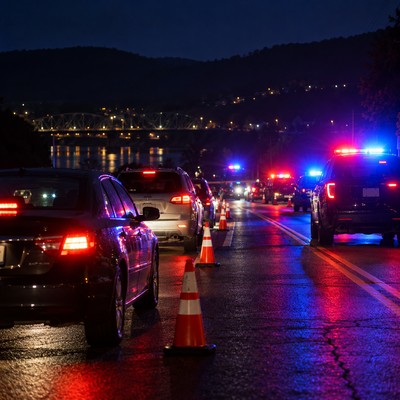
If you were arrested after a Halloween DUI checkpoint, details such as the checkpoint plan, the stopping pattern, the officer's observations, field sobriety testing, breath testing, video footage, and the length of the detention may affect how your case is reviewed.
For a broader explanation of checkpoint law in West Virginia, visit:
https://www.westvirginiaduilawyers.com/dui-checkpoints-in-west-virginia/











Why Halloween Can Bring More DUI Enforcement
Halloween often includes evening parties, costume events, neighborhood gatherings, restaurant visits, bar traffic, and late-night driving. These conditions may lead law enforcement agencies to devote additional resources to traffic and impaired-driving enforcement.
In Martinsburg, Charles Town, Morgantown, Charleston, Huntington, Wheeling, Beckley, and nearby areas throughout West Virginia, Halloween traffic may include drivers leaving private gatherings, downtown events, college-area celebrations, and neighborhood activities.
None of those circumstances proves that a driver is impaired. Attending a Halloween event, wearing a costume, traveling late at night, or leaving a restaurant does not by itself establish that a person has been driving under the influence.
Are DUI Checkpoints Legal in West Virginia?
They can be.
The Supreme Court of Appeals of West Virginia has recognized that sobriety checkpoint roadblocks can be constitutional when they are conducted under predetermined operational guidelines that minimize the intrusion on motorists and limit officer discretion.
A checkpoint differs from a typical traffic stop. In an ordinary traffic stop, police generally need an individualized legal basis to stop a particular vehicle. At a properly operated sobriety checkpoint, officers may briefly stop motorists according to a neutral checkpoint plan even when they did not first observe a traffic violation.
When a checkpoint arrest is reviewed, relevant questions may include:
- Was there a predetermined checkpoint plan?
- Was the checkpoint authorized and supervised?
- Did officers follow a neutral method for determining which vehicles to stop?
- Were motorists treated consistently?
- Did officers limit their discretion at the checkpoint?
- Was the initial detention reasonably brief?
- Did the officer have a factual basis for extending the encounter?
- Did officers follow the checkpoint's stated purpose?
- Do body-camera or dash-camera recordings match the written reports?
A DUI arrest is not automatically valid simply because police described the operation as a sobriety checkpoint. The way the checkpoint was planned and carried out can matter.

Harley Wagner
Defending West Virginia Residents for over 24 Years
Does Halloween Change the Legal Rules for a DUI Checkpoint?
No. Halloween does not create a separate exception to constitutional protections or West Virginia DUI law.
Law enforcement agencies may decide to increase DUI enforcement around a holiday, but the date does not remove the legal limits that apply to a checkpoint or DUI investigation.
The same questions still matter:
- Was the checkpoint lawfully organized?
- Did officers follow a neutral stopping pattern?
- Was the initial delay reasonable?
- Did an officer develop a lawful basis for additional investigation or detention?
A costume, party wristband, restaurant receipt, or late-night travel does not by itself prove impairment.
What Happens When You Reach a DUI Checkpoint?
If you approach a DUI checkpoint, slow down, follow traffic-control directions, and stop where directed.
An officer may request documents such as your driver license, vehicle registration, and proof of insurance. The officer may also observe your speech, movements, appearance, and behavior during the encounter.
Police reports in DUI cases may refer to observations such as:
- Odor of alcohol
- Slurred or unusual speech
- Bloodshot or glassy eyes
- Difficulty locating documents
- Confusion
- Open containers
- Statements about alcohol or drug use
- Physical coordination problems
If an officer believes there are signs of impairment, the encounter may move from a brief checkpoint screening to a more detailed DUI investigation.
For information about roadside testing, visit:
https://www.westvirginiaduilawyers.com/field-sobriety-tests-in-west-virginia/
For information about DUI testing procedures, visit:
https://www.westvirginiaduilawyers.com/dui-testing-in-west-virginia/

Harley and Heather gave me peace of mind as they walked me through the process of my DUI. Heather was so quick to answer even the smallest and probably irrelevant questions I had. I was extremely nervous to walk in the courtroom, but Harley made sure I was in and out of there in no time with the best deal I could think of. My DUI charge was reduced to a speeding ticket and some online DUI classes. Would absolutely recommend Harley and Heather if you’re ever in need of a lawyer.”
- Antea Jarazi
The Wagner Law Firm was amazing from beginning to end dealing with my case. This was my first time ever dealing with anything like this and they helped me tremendously and answered all my questions super fast. We got the best outcome possible for my case and I will be recommending Harley and Heather to anyone that’s ever in my situation."
- Savanna Cummings
Harley and Heather do not stop and are excellent at always keeping their clients up to date on the status of their case and never left wondering. They do all the work and are very well connected throughout the state. I will forever be grateful to both Harley and Heather for what they did for me,,,, they aren’t just another law firm, they are great people who truly care. Thank you."
- Clint Anderson
Can Police Search Your Car at a Halloween DUI Checkpoint?
A DUI checkpoint does not automatically authorize police to conduct a full search of every vehicle.
A vehicle search generally requires a separate lawful basis or valid consent. The exact legal analysis depends on what happened during the encounter.
If police searched your vehicle, an attorney may review:
- What the officer observed before the search
- What the officer said to you
- Whether the officer requested consent
- Whether consent was actually given
- Whether the officer claimed another legal basis for the search
- Whether body-camera or dash-camera footage supports the officer's account
The existence of a checkpoint alone should not be treated as automatic permission for an unrestricted search.
What About Field Sobriety Tests and Breath Testing?
Field sobriety testing and chemical testing involve different legal and evidentiary issues.
Roadside field sobriety exercises may be affected by conditions unrelated to alcohol or drugs. Relevant circumstances can include uneven pavement, poor lighting, passing traffic, fatigue, anxiety, injuries, medical conditions, footwear, and difficulty hearing or understanding instructions.
Halloween can add unusual testing conditions. A driver may be wearing unfamiliar shoes, restrictive clothing, costume accessories, or contact lenses that differ from normal daily wear. Those circumstances do not automatically invalidate a field sobriety test, but they may be relevant when the administration and interpretation of the test are reviewed.
West Virginia law also distinguishes between preliminary breath analysis and secondary chemical testing. Under current West Virginia law, a preliminary breath analysis may be used to help an officer decide whether an arrest should be made. A secondary blood or breath test is tied to a lawful arrest and additional statutory requirements.
For more information about testing and implied consent, visit:
https://www.westvirginiaduilawyers.com/implied-consent-in-west-virginia/
Can You Turn Away Before Reaching a DUI Checkpoint?
Drivers should not make sudden, unsafe, or illegal maneuvers when approaching a checkpoint.
Whether a driver may lawfully take another route depends on the circumstances, including traffic laws, signs, road design, and any directions given by officers. An illegal U-turn, unsafe turn, failure to signal, speeding, or another traffic violation can provide an independent basis for a traffic stop.
If officers are directing traffic, ignoring those directions can create additional legal problems.
The safest general rule is to obey traffic laws, drive normally, and avoid abrupt or illegal movements.
What Should You Do During a Halloween DUI Checkpoint?
Remain calm and focus on safe, lawful conduct.
Practical steps include:
- Slow down and follow traffic directions.
- Keep your hands visible.
- Provide required driving documents when requested.
- Avoid arguing with the officer on the roadside.
- Do not guess when you do not know an answer.
- Do not make unnecessary admissions about alcohol or drug use.
- Do not consent to a vehicle search merely because an officer asks.
- Pay attention to signs, lighting, traffic flow, officer instructions, and the length of the stop.
If you are arrested, keep the paperwork you receive. As soon as practical, write down what you remember about the checkpoint, including the location, approximate time, officer statements, testing instructions, road conditions, and any cameras you noticed.
How a Halloween DUI Checkpoint Arrest Can Be Reviewed
A DUI defense attorney may examine more than a breath result or field sobriety test.
The checkpoint itself can be part of the defense analysis. Relevant materials may include:
- The written checkpoint plan
- Authorization or supervisory records
- Officer assignments
- The planned vehicle-stopping pattern
- Body-camera footage
- Dash-camera footage
- Police reports
- Breath-testing records
- Equipment records
- Witness accounts
- Records showing when and how the checkpoint was operated
An attorney may compare the written checkpoint procedures with what actually occurred.
West Virginia case law also recognizes that not every departure from a checkpoint guideline automatically creates a constitutional violation. The legal effect of a procedural issue depends on the facts, the degree of officer discretion, the reasonableness of the checkpoint, and the nature of the intrusion on motorists.
That is why the full circumstances of the checkpoint matter.
A Halloween DUI Checkpoint Arrest Is Not a Conviction
An arrest begins a criminal case. It does not establish guilt.
The prosecution still must prove the charge with admissible evidence. The defense may examine how the checkpoint was established, what the officer observed, whether the detention was extended lawfully, how testing was conducted, what statements were obtained, and whether video or other records support the police account.
Depending on the circumstances, a person arrested for DUI may also have questions about driving privileges, court dates, employment, insurance, ignition interlock requirements, or other consequences.
The answers depend on the charge, the evidence, prior history, and the facts of the individual case.
Speak With a West Virginia DUI Attorney After a Checkpoint Arrest
If you were arrested at a Halloween DUI checkpoint in West Virginia, The Wagner Law Firm can review how the checkpoint was operated, why the officer extended the stop, what testing occurred, and whether the evidence supports the charge.
Contact the firm online for a consultation.
You can also request a consultation at:
https://www.westvirginiaduilawyers.com/contact-us/
Learn more about attorney Harley Wagner at:
https://www.westvirginiaduilawyers.com/attorney-harley-wagner/
The Wagner Law Firm represents people facing DUI charges in Martinsburg and throughout West Virginia.
This article is for informational purposes only and is not legal advice. Consult an attorney about your specific situation.



|


|