
Bad weather conditions, especially snow, can play a significant role in DUI stops. However, do snowy roads automatically change the probable cause for a police officer to stop a driver? In this piece, we will explore the impact of poor weather conditions on DUI enforcement and delve into whether weather alone justifies a DUI stop. Understanding probable cause and your rights during DUI stops is crucial, especially when navigating snowy or slippery roads. The Wagner Law Firm is here to help guide you through this process if you’ve been caught in such a situation.













Understanding Probable Cause in DUI Stops 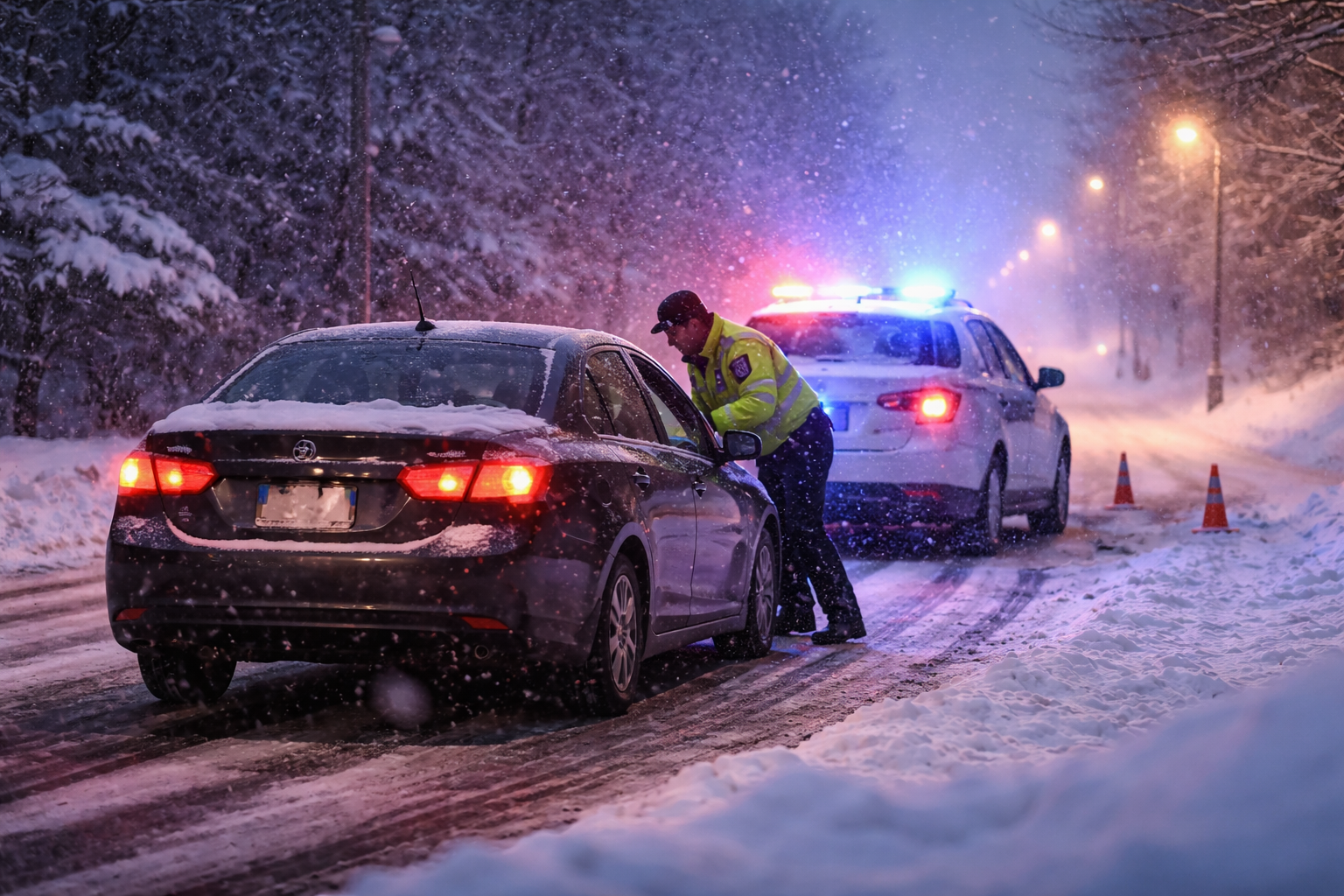
Probable cause is one of the most important elements in determining whether a DUI stop is valid. For a police officer to legally stop a driver, they must have a reasonable belief that the driver is committing or has committed a traffic violation, or that they are under the influence of alcohol or drugs. This standard applies in any weather condition, and bad weather like snow or ice can certainly lead to a DUI stop, but it does not automatically change the requirements for probable cause.
When road conditions are poor due to snow or ice, drivers are more likely to exhibit certain behaviors, such as swerving, driving too slowly, or having difficulty maintaining a straight path. These behaviors can raise suspicion and lead to a DUI stop, but it’s crucial to remember that such actions could also be attributed to the weather rather than impairment. In cases of poor visibility, icy roads, and slippery surfaces, a law enforcement officer must still observe specific signs of impairment to justify a DUI stop. Simply driving erratically due to weather conditions, without showing signs of intoxication, does not automatically justify an arrest.
How Bad Weather Affects Driver Behavior
Snowy roads often lead to hazardous driving conditions, making it difficult to keep control of the vehicle. Drivers may slide or fishtail when trying to regain control after hitting a patch of ice. For law enforcement officers, these actions can appear to be signs of intoxicated driving, especially if the driver’s movements are erratic. Swerving between lanes, driving in and out of turn lanes, or excessively slow speeds in hazardous conditions may be enough to raise suspicion.
However, these behaviors can also be the result of a driver simply navigating unsafe road conditions. For instance, a driver might slow down significantly to avoid sliding on an icy road or might steer carefully to avoid hitting a snowbank. These actions might seem unusual but are often reasonable under the circumstances. Unless the officer witnesses other signs of impairment, such as an odor of alcohol or a failure to follow other traffic laws, these driving errors caused by bad weather alone should not lead to a DUI arrest.
Defending West Virginia Residents for over 24 Years
Harley Wagner
Key Indicators for Probable Cause During Winter Weather
When an officer decides to pull over a vehicle during snowy weather, they need to observe specific signs of impairment before proceeding with a DUI investigation. Some common behaviors that might contribute to probable cause during winter months include:
- Erratic Driving Behavior: If the officer observes a driver weaving between lanes or frequently crossing the centerline, these could be signs of impairment. However, in snowy conditions, swerving could be caused by a slick road, so the officer must assess whether these behaviors are consistent with intoxicated driving or simply a reaction to the weather.
- Speeding or Driving Too Slowly: Speeding is a common sign of impaired driving. In snowy conditions, driving too slowly can also raise suspicion, as it might suggest that the driver is struggling with coordination or focus. However, many drivers will slow down during poor road conditions to stay safe, and this is not an automatic indication of impairment.
- Failure to Maintain Lane: A driver might fail to stay within their lane due to poor road conditions. Officers are trained to watch for signs of impaired driving, but they also must take into account that snow and ice can cause these types of errors without indicating intoxication.
If the officer sees any of the above behaviors and also detects signs of alcohol consumption or impairment (like an odor of alcohol, bloodshot eyes, or slurred speech), this may provide the officer with the probable cause they need to proceed with a DUI investigation.
Harley and Heather gave me peace of mind as they walked me through the process of my DUI. Heather was so quick to answer even the smallest and probably irrelevant questions I had. I was extremely nervous to walk in the courtroom, but Harley made sure I was in and out of there in no time with the best deal I could think of. My DUI charge was reduced to a speeding ticket and some online DUI classes. Would absolutely recommend Harley and Heather if you’re ever in need of a lawyer.” - Antea Jarazi The Wagner Law Firm was amazing from beginning to end dealing with my case. This was my first time ever dealing with anything like this and they helped me tremendously and answered all my questions super fast. We got the best outcome possible for my case and I will be recommending Harley and Heather to anyone that’s ever in my situation." - Savanna Cummings Harley and Heather do not stop and are excellent at always keeping their clients up to date on the status of their case and never left wondering. They do all the work and are very well connected throughout the state. I will forever be grateful to both Harley and Heather for what they did for me,,,, they aren’t just another law firm, they are great people who truly care. Thank you." - Clint Anderson
Does Snowy Weather Alone Justify a DUI Stop?
While snowy weather can certainly contribute to a situation where an officer may pull over a vehicle, the weather alone does not justify a DUI stop. Police officers must still observe specific, objective evidence that suggests the driver is intoxicated. In other words, even if the roads are slick and a driver makes a sudden swerve or drives slowly, these behaviors alone are insufficient to establish probable cause for a DUI stop. Officers must see additional evidence that suggests impairment, such as erratic behavior, alcohol use, or signs of drug use.
The Role of Field Sobriety Tests in Bad Weather DUI Stops
If an officer has reasonable suspicion based on the driver’s behavior, they may ask the driver to perform a field sobriety test. These tests can be difficult to complete in snowy weather due to icy conditions and poor visibility. Some tests, such as walking in a straight line or standing on one leg, are challenging to perform when the ground is slippery or uneven. This raises an important issue: If the driver is unable to perform the test due to weather conditions, it doesn’t necessarily mean they are impaired.
What are the penalties for a DUI conviction? What happens if I'm arrested for a first DUI?Related Videos
Officers must take these factors into account when conducting field sobriety tests during poor weather. If a driver fails a sobriety test under snowy conditions, but there is no clear evidence of impairment (such as an odor of alcohol or bloodshot eyes), it could weaken the case for probable cause in a DUI arrest. The officer must assess whether the test failure is due to intoxication or simply the result of challenging road conditions.
Challenging a DUI Stop in Snowy Conditions
If you have been stopped for a DUI during snowy weather, and you believe the stop was unjustified, it is crucial to contact a skilled DUI attorney who can review the circumstances surrounding your case. An experienced attorney from The Wagner Law Firm can help you challenge the probable cause of your stop and the evidence used against you, especially if the officer relied on driving behaviors that were simply the result of bad weather. Your attorney can help ensure that your rights are protected and that you receive a fair trial.
Case Results
In the end, bad weather conditions do not automatically change the laws surrounding DUI stops. Probable cause remains a fundamental requirement for any DUI arrest, whether the weather is snowy, rainy, or clear. While snow and icy roads can lead to erratic driving, they do not in themselves justify a DUI stop unless there is clear evidence of impairment. If you have been arrested or detained for a DUI under such conditions, it is essential to consult with a knowledgeable attorney to ensure your case is handled appropriately.
If you find yourself in a situation where a DUI stop seems unjustified, contact The Wagner Law Firm for a free consultation. Our skilled attorneys specialize in defending DUI cases in West Virginia, and we can help you navigate your situation effectively.
To learn more about this subject click here: Can You Be Charged With a DUI Without Failing a Breath Test?



|


|